A modern parable about abundance, blindness, and what we owe the people of our society
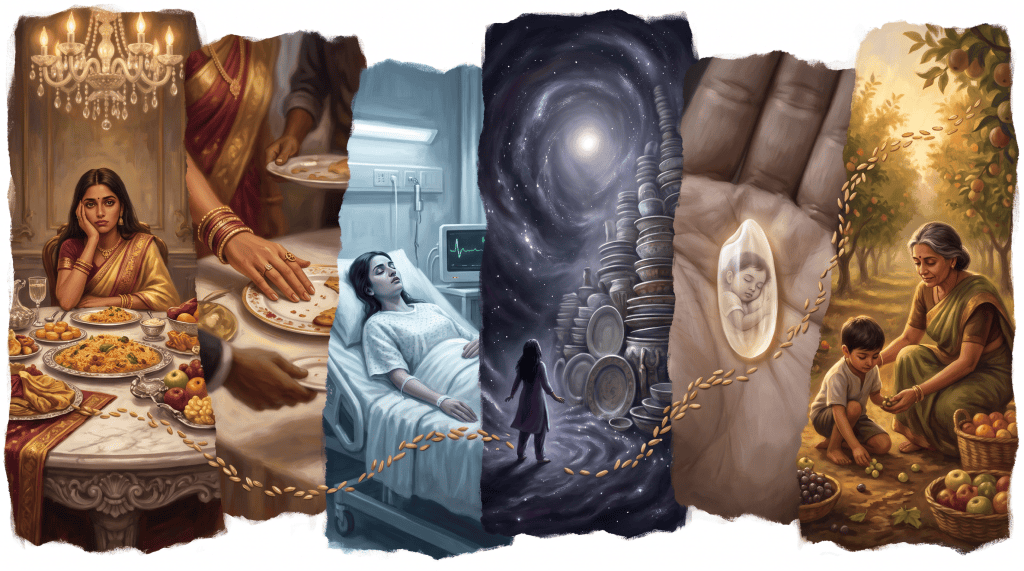
Vaibhavi had never once finished a plate of food in forty years. In her house, that wasn’t rudeness — it was proof you had enough.
She grew up in a home where a bruised grape got thrown out before it touched a fruit bowl, where a silk ribbon with a loose thread was quietly burned rather than worn. Her mother called it excellence. Vaibhavi called it normal. Nobody around her ever called it anything else.
A House of Never Enough
At dinner, the chef sent out a dozen small dishes for every meal — Murgh Musallam, Dal Bukhara, Kulchas dripping with ghee — and Vaibhavi would taste a corner of each, decide she wasn’t in the mood, and push the rest aside. The servants cleared it without a word. Nobody ever told her she was wasting the gift of the gods, because in her world, waste wasn’t a word that applied to people like her. It was for other households, other cities, other lives she’d only heard of as in passing.
She wasn’t cruel. She just never had a reason to notice.
Nobody says “enough” to a person who’s never been told NO. So Vaibhavi never learned what enough looked like.
The Illness
It wasn’t dramatic. Just a fatigue that crept in and refused to leave, until she was in a hospital bed listening to a heart monitor instead of a lavish dinner party.
Somewhere under sedation, the marble and the jasmine of her house drifted away. She found herself standing in something vast and quiet — no servants, no name, no pedigree. Just a white light, and a silence heavier than anything she’d felt in her life.
Vaibhavi took her time, but finally she spoke out loud.
“मी कधीच कोणाचा तांबडा रुपया चोरला नाही, की कधी कोणाचं वाईट चिंतलं नाही. मला कधी अनावर राग आला नाही, की मी कधी कोणाशी अपशब्ध बोलले नाही. मी नेहमी एक आज्ञाधारक मुलगी, संस्कारी बायको आणि जबाबदार आई म्हणून माझं कर्तव्य चोख बजावलं. माझं आयुष्य इतक्या समाधानात चाललेलं असताना, माझ्यावर एवढ्या लवकर परत जाण्याची वेळ का यावी?” ती म्हणाली.
(“I have never stolen a single penny from anyone, nor have I ever wished ill upon a soul. I never lost my temper, nor did I ever speak a harsh word to anyone. I lived my life as an obedient daughter, a devoted wife, and a responsible mother, fulfilling every duty flawlessly. When my life was filled with such peace and contentment, why must I be called back so soon?” she said.)
The light didn’t answer in words. It showed her every plate she’d ever pushed away, stacking one on top of another until they formed a mountain so huge, beyond which Vaibhavi couldn’t see.
What the Light Showed Her
It held up a single grain of rice. In it, she saw a child in a settlement not far from her own gate, going to sleep on water and air the same night she’d scraped a full bowl of pulao into the bin.
“तू त्याला सुरीने जखमी केलं नाहीस. तू त्याला केवळ दुर्लक्षातून दुखावलं. प्रत्येक दाणा, प्रत्येक थेंब, प्रत्येक श्वास ही उसनवारी होती, मालकी नव्हती. तू तुझा वाटा खर्च केला, पण हे कधी कळलंच नाही की त्यासोबत दुसऱ्याचाही वाटा खर्च होत होता,” प्रकाश म्हणाला.
(“You didn’t hurt him with a knife. You hurt him only by Willful IGNORANCE. Every grain, every drop, every breath was a loaned, not owned. You splurged your grain, but never realized you were slowly depleting someone else’s share too,” the light said.)
That was the whole of it. Not a punishment — just an accounting she’d never been asked to do before.
“वाया घालवणं म्हणजे भविष्यातून चोरी करणं. ताट कधीच फक्त तुझं नसतं.”
(“To waste is to steal from the future. The plate is never yours alone.”)
The Feast She Came Home To
She woke up changed and went home to a house that hadn’t. Her family had laid out a welcome feast — silver cloches of biryani, crystal bowls of dessert — meant to reassure her that nothing needed to change.
Her young son took one bite of a paratha, didn’t like the crisp edge, and pushed the whole piece to the edge of the table without a second thought. Six months ago, Vaibhavi would have signaled for a fresh one.
But this time, she said:
“थांब.”
(“Wait.”)
She carefully placed her hand over her son’s and calmly counseled him.
“बेटा, हा जो पराठा तुझ्या ताटात आहे ह्याचे महत्व तुला, माहीत आहे का? हे फक्त पीठ आणि पाणी नाही. कोणीतरी महिनोंमहिने उन्हात हा गहू पिकवला. कोणीतरी तो दळला, कोणीतरी आज सकाळी तुझ्यासाठी शिजवला. जर आपण फक्त कडकपणा आवडला नाही म्हणून हे फेकून दिलं, तर आपण फक्त पोळी वाया घालवत नाही आहोत — आपण असं वागतोय जणू ते सगळे कष्टच झालेच नाहीत.”
(“Beta, do you know the importance of paratha on your plate? That’s not just flour and water. Someone grew this wheat in the sun for months. Someone ground it, someone cooked it for you this morning. If we throw it away just because we didn’t like the crunch, we’re not just wasting bread — we’re acting as if all that effort never happened.”)
The Rule of the Hand
She started something small that week and it was just the beginning of many changes she would bring to come: before anyone filled a plate, they only took what fit in two cupped hands. If they were still hungry after, there was always more. But once food touched the plate, finishing it wasn’t optional — it was the one job you owed the person who made it.
She took her children into the kitchen — not to give orders, but to watch. The heat off the stove. The grinding stone. The sweat on the cook’s forehead before nine in the morning. She wanted food to stop feeling like something that simply appeared, because that’s exactly what had made it so easy to waste.
A few months later, she started a community kitchen. Not by writing a cheque and walking away — she actually worked shifts in it. Her children grew up thinking that was normal too, the same way she’d once grown up thinking a half-eaten plate was normal.
The Ending
Back at her father’s orchard the next harvest, Vaibhavi watched the same trees that used to feed only the discard pile. This time, the pickers set aside anything with a bruise or a soft spot into a second crate — headed for the community kitchen instead of the compost heap.
Her son, a little older now, picked up an orange that had rolled into the dirt, wiped it on his shirt, and ate it before anyone could tell him not to. A year earlier, that orange would have been swept away with the peels and the stems, and nobody would have noticed it was gone.
Vaibhavi didn’t say anything. She just smiled, because for the first time in her life, nothing on that orchard floor was going to waste.
If you’ve read this far — think about the last plate you scraped into the bin without a second thought. You probably weren’t being cruel either. Most of us aren’t. We’re just never asked to notice.
That’s the whole trick abundance plays on people. It doesn’t make us heartless. It just makes us blind, comfortably, one full plate at a time.


Leave a Reply